
Day 3: History and Evolution of Artificial Intelligence
Welcome back to Day 3 of our “AI for 30 Days” series! Today, we’ll take a journey through the history and evolution of Artificial Intelligence (AI), tracing its origins from its early beginnings to the present day.
Early Beginnings
The concept of artificial intelligence dates back to ancient times, with myths and legends depicting artificial beings endowed with human-like qualities. However, the modern era of AI began in the mid-20th century with the advent of electronic computers and the pioneering work of researchers such as:
• Alan Turing: Turing proposed the concept of a “universal machine” capable of performing any computation that could be described by a set of instructions, laying the groundwork for modern computing and AI.
• John McCarthy: McCarthy coined the term “Artificial Intelligence” and organized the Dartmouth Conference in 1956, which is considered the birth of AI as a field of study.
• Marvin Minsky and Herbert Simon: Minsky and Simon made significant contributions to AI research, including the development of early AI programs and models of human cognition.
The AI Winter
Despite early optimism and excitement about the potential of AI, the field experienced periods of stagnation and disillusionment known as “AI Winters.” These periods, characterized by a lack of progress and funding, occurred in the late 1960s and again in the late 1980s and early 1990s due to challenges and setbacks in AI research.
Resurgence and Advancements
In the late 20th century and early 21st century, AI experienced a resurgence fueled by advances in computing power, algorithms, and data availability. Key developments during this time include:
° Expert Systems: Expert systems, which emulate the decision-making abilities of human experts in specific domains, became popular in the 1980s.
• Machine Learning: Machine learning algorithms, particularly neural networks and deep learning, gained prominence in the 2000s due to their ability to learn from data and improve performance over time.
• Big Data and Cloud Computing: The proliferation of big data and cloud computing technologies provided the infrastructure and resources needed to train and deploy AI models at scale.
Current State and Future Outlook
Today, Artificial Intelligence is a thriving and rapidly evolving field with applications spanning industries such as healthcare, finance, transportation, and entertainment. From virtual assistants and self-driving cars to medical diagnosis and drug discovery, AI is transforming the way we live, work, and interact with the world around us.
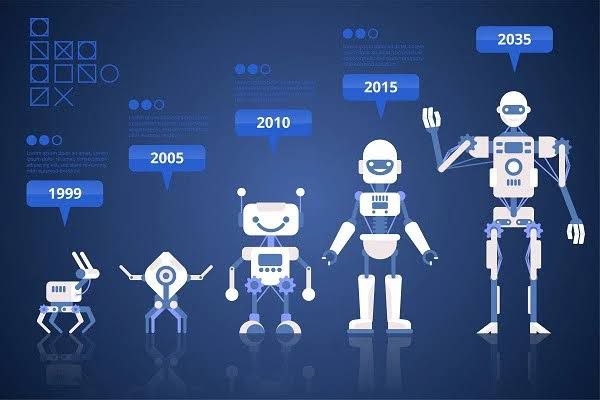
The history of Artificial Intelligence is a story of innovation, perseverance, and resilience. Despite setbacks and challenges along the way, AI has emerged as one of the most transformative technologies of our time, with the potential to revolutionize countless industries and improve the human experience in profound ways.
Join us tomorrow as we explore key concepts in AI, including algorithms, machine learning, and neural networks. Get ready to dive deeper into the fascinating world of Artificial Intelligence!
 annonymousAsquare(aiBard)
Leave a comment