
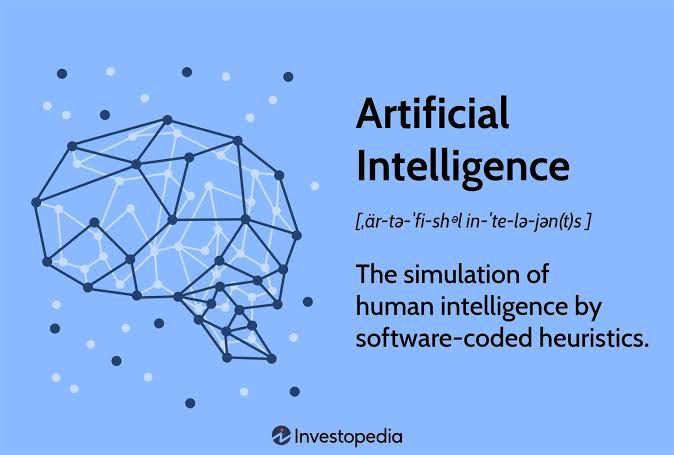
Day 4: Key Concepts in Artificial Intelligence
Welcome to Day 4 of our “AI for 30 Days” series! Today, we’ll delve into some of the key concepts that form the foundation of Artificial Intelligence (AI), including algorithms, machine learning, and neural networks.
Algorithms
Algorithms are sets of rules and instructions that govern the behavior of AI systems. These algorithms enable computers to perform specific tasks or solve particular problems by processing input data and producing output based on predefined logic. Some common types of algorithms used in AI include:
• Search Algorithms: Used to find optimal solutions in problem-solving tasks, such as pathfinding in a maze or scheduling tasks.
• Sorting Algorithms: Used to arrange data in a specific order, such as alphabetical or numerical order.
• Optimization Algorithms: Used to find the best solution among a set of possible solutions, such as finding the shortest route in a transportation network or maximizing efficiency in resource allocation.
Machine Learning
Machine Learning is a subset of AI that focuses on developing algorithms and techniques that enable computers to learn from data and improve their performance over time without being explicitly programmed. The three main types of machine learning are:
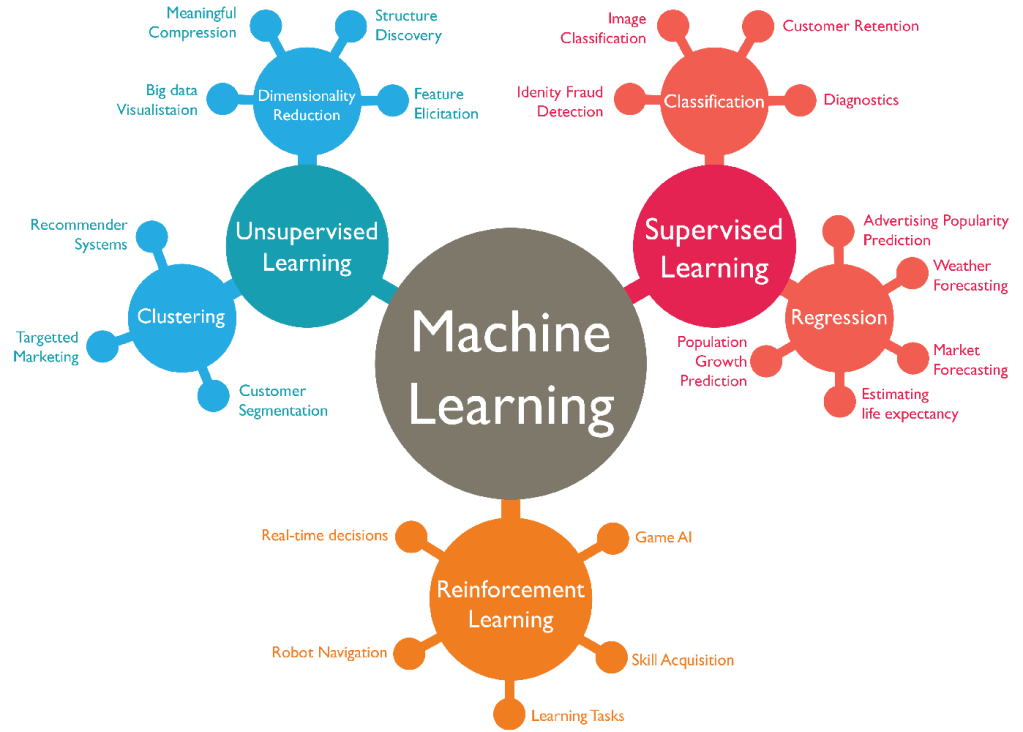
• Supervised Learning: In supervised learning, the algorithm is trained on labeled data, where each input is associated with a corresponding output. The algorithm learns to map inputs to outputs based on examples provided during training.
• Unsupervised Learning: In unsupervised learning, the algorithm is trained on unlabeled data, and its objective is to find patterns or structure in the data without explicit guidance. Clustering and dimensionality reduction are common tasks in unsupervised learning.
• Reinforcement Learning: In reinforcement learning, the algorithm learns to make decisions by interacting with an environment and receiving feedback in the form of rewards or penalties. The goal is to maximize cumulative reward over time by learning optimal strategies or policies.
Neural Networks
Neural Networks are computational models inspired by the structure and function of the human brain. These networks consist of interconnected nodes, or neurons, organized into layers. Each neuron receives input from other neurons, applies a transformation, and passes the output to the next layer. Some common types of neural networks used in AI include:
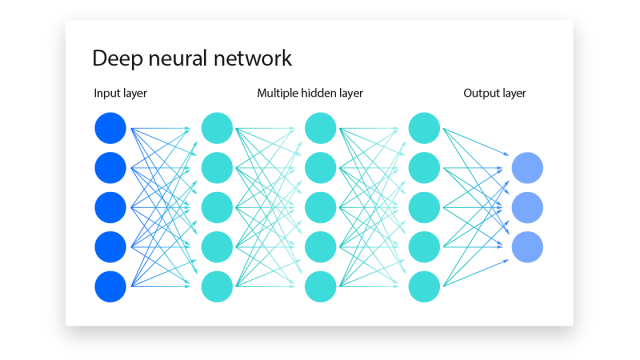
• Feedforward Neural Networks: The simplest type of neural network, where information flows in one direction, from input to output.
• Recurrent Neural Networks (RNNs): Neural networks with connections that form cycles, allowing them to process sequences of data with temporal dependencies.
• Convolutional Neural Networks (CNNs): Neural networks designed to process and analyze visual data, such as images or videos, by leveraging convolutional layers.
Understanding these key concepts is essential for building a strong foundation in Artificial Intelligence. By mastering algorithms, machine learning techniques, and neural networks, we can develop sophisticated AI systems capable of solving complex problems and driving innovation in various domains.
Join us tomorrow as we explore the diverse applications of Artificial Intelligence in everyday life. Get ready to discover how AI is transforming industries, enhancing productivity, and improving the human experience in countless ways!
“Machine learning is the engine fueling the future, turning data into insights and dreams into reality.”
 annonymousAsquare(aiBard)
Leave a comment